Unlocking the Versatility of Tile Abstract Seamless Pattern Designs
In the rapidly evolving landscape of digital and physical design, finding a visual element that bridges the gap between modern aesthetics and classic elegance can be challenging. This is where the Tile Abstract Seamless Pattern steps in as a transformative resource. Whether you are a graphic designer crafting a brand identity, a fashion student developing a textile collection, or a homeowner looking for unique wallpaper, understanding the capabilities of this design format is essential. The core value lies not just in the visual appeal, but in the infinite repetition and tiling capabilities that allow a single image to expand into vast surfaces without visible breaks.
What Defines an Abstract Seamless Pattern?
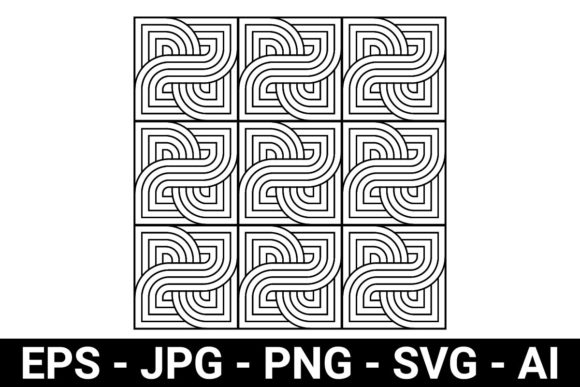
At its heart, a seamless pattern is a design that repeats perfectly in any direction. When you place one instance next to another, the edges align so precisely that the human eye cannot detect the join. This creates an illusion of a continuous surface. When combined with abstract elements—such as wavy lines, geometrical shapes, or linear structures—the result is a dynamic backdrop that feels both organic and structured.
The term "Tile" refers to the method of arrangement. Imagine a floor covered in tiles; if each tile has a matching edge, you can cover an entire stadium floor with them without cutting or stopping. In the digital realm, this concept translates to vector graphics and raster images that can scale infinitely. A black and white monochrome version offers a stark, high-contrast look that is timeless, while color variations can add depth and personality. The beauty of this approach is its symmetry and balance, which naturally draws the viewer's eye across the entire composition.
The Power of Monochrome and Line Art
One of the most striking variations of this style is the use of line art and monochrome palettes. By stripping away color, the focus shifts entirely to the ornament, the decoration, and the flow of the design. Elegant black lines on a white background create a sense of sophistication that works well in fashion prints, editorial layouts, and minimalist interior decor. This simplicity allows the pattern to act as a subtle texture rather than a loud distraction, making it incredibly versatile for various applications.
Furthermore, the striped and geometric aspects often found in these patterns provide a sense of order. They can break up large spaces, guide the eye, or simply add a layer of visual interest that keeps a design from feeling flat. Whether the lines are straight, wavy, or irregular, the underlying principle remains the same: creating a cohesive unit that functions as a whole.
Why Choose a ZIP Folder Format for Your Projects?
When designers acquire a Tile Abstract Seamless Pattern pack, they are often receiving a comprehensive ZIP folder containing multiple file formats. This diversity is crucial for ensuring the pattern performs correctly across different mediums. Each format serves a specific purpose, and understanding their strengths helps professionals achieve the best results.
- AI (Adobe Illustrator): These are vector files that contain mathematical paths. They are the gold standard for scalability. You can resize a vector pattern from the size of a business card to the side of a building without losing any quality. This makes them perfect for large-scale backdrop creation and print projects.
- EPS: Similar to AI, EPS files are widely compatible with various design software, including older versions of Adobe products and other vector editors. They ensure that your art and illustration remain crisp when transferred between different systems.
- SVG: Scalable Vector Graphics are ideal for web development. An SVG pattern can be embedded directly into HTML code, allowing for lightweight, responsive designs that load quickly on mobile devices. This is essential for modern graphic design on the internet.
- PNG: Portable Network Graphics offer lossless compression with transparency support. PNGs are excellent for overlaying patterns onto other images or using them in digital mockups where a transparent background is needed.
- JPG: While JPGs do not support transparency, they are universally supported and have smaller file sizes compared to PNGs. They are perfect for quick previews, email attachments, or situations where compatibility is more important than editability.
Having all these formats in one package means you don't need to worry about converting files later. You can start with the vector source for editing and export the necessary raster versions for final output. This workflow efficiency is a significant advantage for busy creators and businesses.
Practical Applications Across Industries
The utility of a seamless pattern extends far beyond simple decoration. Its ability to cover surfaces completely makes it a foundational tool in many industries. Let's explore how this resource is utilized in real-world scenarios.
Fabric and Fashion Design
In the world of textiles, printing requires patterns that repeat flawlessly. A fabric roll might be hundreds of yards long; if the pattern doesn't align at the seams, the garment will look defective. Designers use tile abstract seamless pattern assets to create clothing, scarves, and home textiles. The repetitive nature ensures that whether the fabric is cut into a shirt or a curtain, the design flows naturally. The creative potential here is limitless, from bold geometrical prints to subtle striped textures.
Interior Decor and Wallpaper
For homeowners and interior designers, wallpaper is a primary application. A good wallpaper design must hide the seams where rolls meet. A high-quality seamless pattern guarantees that the decor looks uniform across an entire wall. Whether the goal is a modern black and white aesthetic or a classic ornamental look, these patterns provide the texture needed to transform a room. They can also be used for wrapping paper, adding a personal touch to gifts with custom design elements.
Digital Media and Web Design
On the web, backgrounds set the mood. A background pattern can add depth to a website without overwhelming the text. Using a linear or wavy abstract pattern can make a landing page feel more dynamic. Because SVG and PNG versions are available, developers can implement these patterns responsively. The graphic quality ensures that the site looks professional on high-resolution screens, maintaining clarity even when zoomed in.
Evaluating Suitability and Best Practices
While the versatility of these patterns is a strength, selecting the right one requires careful consideration. Not every pattern fits every project. When evaluating a Tile Abstract Seamless Pattern, consider the following factors:
- Scale and Density: A dense geometrical pattern might work beautifully as a small accent, but could become chaotic if used as a full-page background. Ensure the scale matches the intended viewing distance.
- Contrast and Readability: If the pattern is being used behind text, ensure there is sufficient contrast. A black and white design is often easier to read over than a complex multi-colored one, but sometimes a subtle monochrome texture is better for readability.
- File Format Compatibility: Always check if your chosen software supports the file type provided. While AI and EPS are industry standards, some online tools only accept JPG or PNG.
- Licensing and Usage Rights: Even though the content is practical, always verify the license terms. Most commercial packs allow for extensive use, but some may restrict certain types of resale or redistribution.
It is also important to manage expectations regarding the "perfect" look. While the technology ensures a seamless join, the artistic vision still relies on the user's placement. A wrap or a print job requires proper calibration to ensure the pattern aligns with the physical dimensions of the product. Testing a sample before committing to a large run is always a wise step.
Conclusion: A Timeless Tool for Modern Creators
The Tile Abstract Seamless Pattern represents a convergence of technical precision and artistic expression. It offers a solution that is as useful for a business owner needing a quick branding asset as it is for an artist seeking inspiration. With its flexible formats like AI, EPS, SVG, JPG, and PNG, it adapts to the needs of any workflow. From fabric to wallpaper, from web to print, the potential applications are boundless.
By understanding the nuances of tiling, symmetry, and repetition, creators can leverage these patterns to elevate their projects. Whether you prefer the clean lines of a linear design or the fluid motion of a wavy motif, the right pattern can turn a mundane surface into a statement piece. As we move forward in a visually driven world, having access to high-quality, versatile design resources like this is more valuable than ever. Embrace the power of the seamless pattern and let your creativity flow without limits.