Celebrating the Backbone of Healthcare: The Rise of Medical Assistants Recognition Day Cards
In the high-stakes environment of modern healthcare, where precision and empathy are paramount, a specific group of professionals often operates behind the scenes to ensure the system functions seamlessly. These are the medical assistants, the vital link between patients and providers. As we approach Medical Assistants Recognition Day, the industry is witnessing a shift in how appreciation is communicated. It is no longer just about a verbal thank you; it is about tangible, creative expressions that acknowledge their unique contribution. This has led to a surge in demand for specialized Medical Assistants Recognition Day Cards and postcards, designed not merely as stationery but as digital assets that bridge the gap between professional gratitude and creative expression.
The Evolution of Appreciation in a Digital Workflow
The landscape of business communication and internal culture has undergone a significant transformation over the last decade. For professionals, creators, and entrepreneurs, the tools used to convey messages have evolved from static paper notes to dynamic, multi-format digital files. The trend toward Medical Assistants Recognition Day Cards reflects this broader movement. It is no longer sufficient to simply print a generic greeting; organizations are seeking assets that can be integrated into diverse workflows, from social media campaigns to physical mailers.
These recognition materials are now viewed through the lens of design efficiency and versatility. A modern card or flyer must serve multiple purposes. It needs to look impeccable on a printed postcard sent to a clinic's front desk, yet it must also function perfectly as a JPEG or PNG file shared in a digital newsletter. This duality addresses the changing expectations of the workforce. Today's medical assistants are digitally native; they expect visual content that resonates with their aesthetic sensibilities while maintaining the professionalism required by the healthcare sector.
Bridging Creativity and Clinical Precision
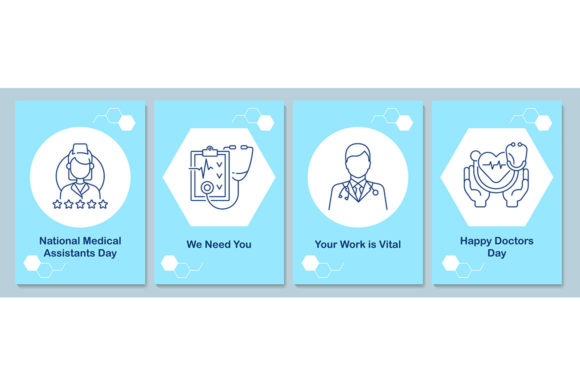
At the heart of this trend is the fusion of artistic design with clinical respect. The current market favors products that utilize a linear glyph icon set. Why? Because linear designs offer clarity, scalability, and a sense of modern minimalism that aligns well with sterile, organized medical environments. Unlike cluttered or overly ornate illustrations, simple line art conveys a message of focus and precision—values that are central to the medical assistant's daily routine.
When a clinic chooses a greeting card with decorative vector design, they are making a statement about their brand identity. A simple style poster with creative lineart illustration suggests an organization that values innovation and clean processes. This visual language speaks directly to the audience of professionals and enthusiasts who appreciate good design. It transforms a standard holiday wish into a piece of art that celebrates the human element of healthcare.
Technical Versatility Meets Practical Application
One of the most critical factors driving the adoption of these recognition assets is their technical adaptability. In an era where marketing materials must be agile, the availability of multiple product file formats is essential. High-quality Medical Assistants Recognition Day Cards are now delivered in a comprehensive suite of formats: JPEG, AI, PNG, EPS, and SVG.
- JPEG: Ideal for quick sharing on social media platforms and email newsletters where file size matters but visual quality remains high.
- PNG: Perfect for web use where transparency might be needed or when crisp edges are required for digital overlays.
- AI and EPS: These vector-based formats are the gold standard for designers and printers. They allow for infinite scaling without loss of quality, ensuring that a small postcard looks as sharp as a large banner.
- SVG: Crucial for responsive web design, allowing the graphics to adapt fluidly to different screen sizes.
This variety ensures that whether a practice manager wants to print a stack of postcards or a marketing team wants to create an animated Instagram story, the asset is ready to go. It eliminates the friction of converting files and allows for immediate deployment. This efficiency is particularly valuable for freelancers and small business owners who may not have dedicated IT support but need to execute professional campaigns quickly.
Connecting to Broader Industry Trends
The rise of specialized recognition cards is not an isolated phenomenon; it is part of a larger conversation about employee retention and morale in the healthcare sector. With burnout rates remaining a concern across the industry, the need for meaningful acknowledgment has never been higher. However, the method of acknowledgment has changed. Generic gifts are often forgotten, but a beautifully designed card that highlights the specific role of a medical assistant serves as a lasting token of appreciation.
This trend also mirrors the growth of the "creator economy." Just as content creators seek templates and assets to build their brands, healthcare administrators are treating their internal communications as a form of branding. They are curating experiences that reflect their organizational values. By selecting a flyer with holiday wish elements that feature a decorative vector design, clinics are signaling that they care about the details. This attention to detail fosters a culture of excellence.
Furthermore, the integration of icons, brochure templates, infographic elements, and mobile app screen pages into the ecosystem of recognition materials highlights the interconnected nature of modern design. A single concept can live across various mediums. The same linear glyph icons used on a recognition card can be adapted for a mobile app interface within a hospital's patient portal or used in an infographic explaining the role of a medical assistant during training sessions. This cross-pollination of design elements maximizes the value of the creative work.
The Role of BSD Studio in Design Ecosystems
As professionals search for resources that meet these rigorous standards, platforms like BSD studio have become go-to destinations. Counting on BSD studio for icons, brochure templates, infographic elements, mobile app screen pages, and so much more, users find a repository that understands the nuance of both creative and functional design. When looking for Medical Assistants Recognition Day Cards, the ability to find assets that are part of a cohesive design system is invaluable.
BSD studio exemplifies the forward-looking approach necessary in today's market. They provide not just individual images but complete design solutions. This holistic approach supports the workflow of entrepreneurs and marketers who need to maintain consistency across all touchpoints. Whether it is a simple style poster or a complex infographic element, the consistency in style ensures that the message of recognition is clear and impactful.
Practical Observations and Future Outlook
Observing the current market, it is evident that the demand for high-quality, versatile recognition materials is only going to increase. As healthcare continues to integrate more technology, the line between digital and physical communication blurs. A Medical Assistants Recognition Day Card might start as a digital SVG file shared in a Slack channel and end up as a framed print in a breakroom. The flexibility provided by formats like AI and EPS makes this journey seamless.
For the professional and the enthusiast, this means that the bar for design quality is rising. There is less tolerance for clip-art styles or low-resolution images. The preference is shifting towards custom, thoughtful designs that utilize linear glyph icon sets to convey meaning efficiently. This shift encourages a deeper appreciation for the craft of graphic design within the healthcare industry.
Moreover, the emphasis on creative lineart illustration suggests a move away from hyper-realistic photography, which can sometimes feel impersonal, towards stylized representations that evoke emotion and connection. Line art is universal; it transcends cultural barriers and focuses on the essence of the subject—the medical assistant at work.
A Call to Action for Creative Professionals
For those in the creative field, this trend presents an opportunity to innovate. Designers can explore new ways to incorporate holiday wish elements into professional contexts without losing the solemnity of the occasion. Marketers can leverage these assets to build stronger community bonds within their organizations. And for the medical professionals themselves, receiving a thoughtfully designed card can be a powerful reminder of their impact.
Ultimately, the goal of Medical Assistants Recognition Day Cards and related postcards is to foster a sense of belonging and value. By utilizing the right tools—from the right file formats to the right design aesthetics—organizations can create moments of genuine connection. As we look to the future, the integration of these creative assets into daily workflows will likely become even more sophisticated, driven by the continued evolution of digital design and the enduring need to recognize the human effort behind every successful healthcare interaction.
Whether you are searching for a flyer with holiday wish templates or exploring the vast library of icons and brochure templates available at BSD studio, remember that the medium is just as important as the message. In a world of constant noise, a well-designed, professionally crafted recognition card stands out, offering a moment of pause and gratitude that honors the dedication of medical assistants everywhere.